Victor Mooney
Stephen King Three Classic Novels Box Set: Carrie, 'Salem's Lot, the ShiningVictor Mooney is the Senior Class President and master of ceremonies at Ewen High School’s 1979 Spring Ball. His role is initially one of orderly public performance: he directs the crowd, conducts the voting, and announces the royal results. That ceremonial authority becomes grotesquely inverted when the Spring Ball collapses into catastrophe. After fleeing the burning school, Victor appears blood-marked, injured, and grinning uncontrollably, reduced from the evening’s confident announcer to a traumatized witness who can name only Carrie as the event’s terrible center.
Identity and Public Role
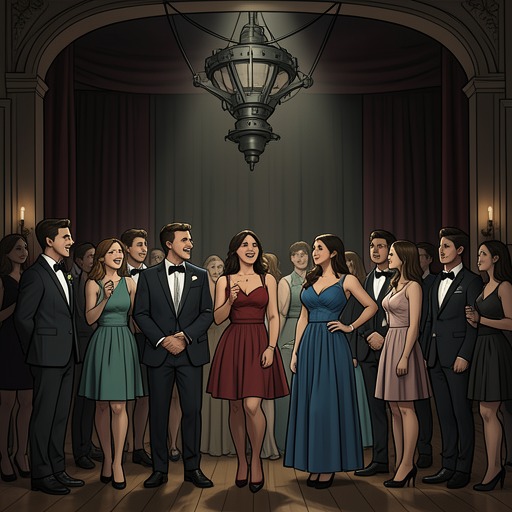
Victor is identified during the Spring Ball as President of the Senior Class, a position that gives him formal control over the evening’s public rituals. He calls into the microphone for the students to take their seats and announces that the voting for King and Queen is about to begin. The language of the occasion is light and communal, but his authority is real: he gathers attention, receives the ballots, and converts the students’ private choices into an official result.
His emcee duties place him at the intersection of school hierarchy and adolescent spectacle. The contest itself is briefly challenged as an insult to women, while another student replies that it insults men as well; the exchange produces general laughter and the protest fades. Victor therefore presides over a ceremony that presents gendered roles as entertainment even as the students’ joking resistance exposes the ritual’s artificiality. His microphone turns the gym into a stage, and his announcements make the crowd’s judgments public.
The Voting and Coronation
Victor’s first important intervention comes when the initial count produces a tie. He announces that there are sixty-three votes for Frank Grier and Jessica MacLean and sixty-three for Thomas Ross and Carrie White. The result unexpectedly places Carrie, who has been socially humiliated and excluded, beside Thomas Ross in the central symbolic position of the dance. The crowd’s silence gives way to swelling applause, turning an uncertain ballot into a moment of public recognition.
The second count intensifies the ritual rather than resolving it quietly. After the ballots are stacked and counted three times, Victor pauses before speaking, visibly savoring the tension in the room. He announces that Tommy and Carrie have won by one vote. The narrow margin makes the coronation feel both official and precarious: Carrie has crossed from outsider to queen, but the collective approval remains vulnerable to the cruelty already embedded in the evening.
Victor then gives the decisive public proclamation: the King and Queen of the 1979 Spring Ball are Tommy Ross and Carrie White. His announcement completes Carrie’s ceremonial elevation. Applause swells through the hall, and Tommy takes Carrie’s hand and grins at her in what are described as the fading moments of his life. Victor’s words thus help create the briefest possible triumph, one that appears to promise acceptance while standing immediately before the violence that will destroy the ceremony.
Witness to the Spring Ball Disaster
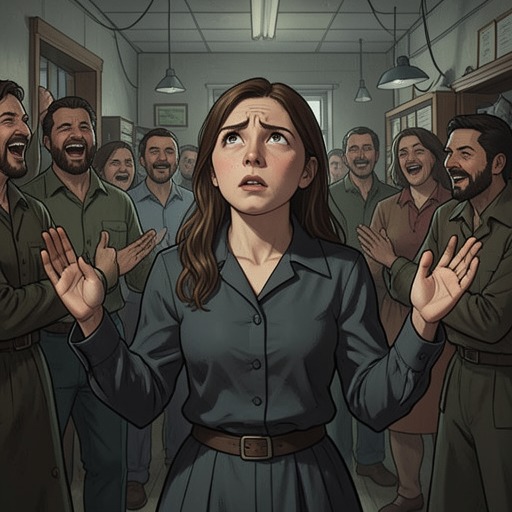
Victor is present when Carrie’s humiliation is transformed into a spectacle of blood. From Carrie’s perspective, the laughter of the students, including Victor’s, becomes part of the nightmare: his face is visibly shocked, yet laughter still issues from him. The contradiction matters. Victor is not presented simply as a calculating persecutor; he appears horrified and nevertheless caught within the crowd’s contagious response, his public participation helping make the ritual of humiliation collective rather than private.
The blood covering Carrie reverses the meaning of the coronation. The same event that has placed a crown-like honor upon her now exposes her before the entire school, repeating the bodily shame of the shower-room incident on a vastly larger stage. Victor’s microphone and ceremonial authority belong to the first ritual, while his laughter becomes part of the second. In the space between those roles, the Spring Ball changes from an adolescent celebration into the scene of Carrie White’s telekinetic retaliation.
Escape and Traumatized Aftermath
After the destruction begins, Victor escapes the Spring Ball and is later found near the Bankers Trust drive-in office. His appearance registers the physical and psychological consequences of the disaster: his carefully slicked emcee hair now sticks up like a crow’s nest, tiny drops of blood mark his forehead, and one eye is swollen purple and screwed shut. The fire throws wavering shadows across the scene, bathing the surroundings in maroon tones associated with dried blood.
Victor’s behavior is more disturbing than his injuries. He approaches Sheriff Doyle with an enormous, awful grin, then clutches him with both arms in an embrace that resembles the grasp of an amorous dancer. He stares upward with a crazed expression and continues grinning even after Doyle slaps him twice and the scream abruptly stops. The grin remains like an echo of evil, suggesting a mind unable to process what it has witnessed except through a fixed, involuntary expression.
When Sheriff Doyle demands to know what happened at the school, Victor can offer only a fragmented answer: Carrie happened there. He begins to explain but trails off, still grinning at the ground. His final response reduces the disaster to a name, yet that reduction is also the clearest recognition available to him. The emcee who had made Carrie Queen now becomes one of the broken witnesses through whom the catastrophe is remembered.
Contrasts and Limits of His Witness
Victor’s role also exposes the distance between ceremonial knowledge and lived understanding. He can count ballots precisely, repeat the official title of the royal pair, and command the room through the microphone, yet he cannot later narrate the disaster in an orderly sequence. His answer to Sheriff Doyle is not an explanation but a collapse of explanation into a single name: Carrie. The contrast makes him a useful measure of the Spring Ball’s value shift. An evening organized around votes, applause, and school status becomes an experience so overwhelming that its master of ceremonies loses the language of ceremony.
The earlier shower-room incident gives this breakdown a grim background. Carrie’s blood had been visible to the girls before the Spring Ball, and the episode had already made menstruation a public spectacle of shame. At the dance, that private bodily humiliation is reproduced before the whole school through the pig-blood prank. Victor therefore stands at the crossing point of two failed communal rituals: the school’s disciplinary response to the shower-room cruelty and the later celebration that crowns Carrie only to expose her again. The administration’s response to the earlier incident is represented by a week of detention in the gym under Miss Desjardin’s supervision, but the punishment does not prevent the later ceremony from becoming another instrument of collective violence.
Narrative Function
Victor is not the architect of the prank, and the available scenes do not assign him a deliberate plan against Carrie. His significance lies instead in his position as an institutional participant and witness. As Senior Class President, he gives public form to the students’ choices; as emcee, he turns the vote into spectacle; as one of the laughing observers, he is implicated in the crowd’s response; and as the injured survivor outside the school, he carries the spectacle into the aftermath. The same public voice that announces Carrie’s elevation is followed by an inarticulate report of her catastrophe.
His final appearance also extends the novel’s treatment of trauma beyond Carrie herself. The Spring Ball disaster does not leave only its direct target transformed. It distorts the bodies, expressions, and speech of those who flee it. Victor’s blood-marked forehead, damaged eye, disordered hair, and terrible grin make him a visual remnant of the burning school, while his broken statement supplies the event’s most compressed formulation. In his presence, the disaster becomes both something seen and something that cannot be adequately told.